#IndonesiaSadar: Mapping the Digital Conversation
Key points
- 1The hashtag was already circulating before the 28 October protest. The earliest post Kaiora found using #IndonesiaSadar was published on 19 October. In the days that followed, people shared protest up
- 2“Sadar Dipalak, Sadar Dibakar, Sadar Dimiskinkan” was the most common slogan. It expressed an awareness of economic-potilical pressure and forest fires. People feel they are being squeezed for money,
- 3The concerns were about everyday life. People discussed taxes, the cost of basic necessities, education, and forest fires.
- 4During the protest, more posts focused on participants’ safety and conditions on the ground. people shared support, prayers, and reports of tensions in several locations.
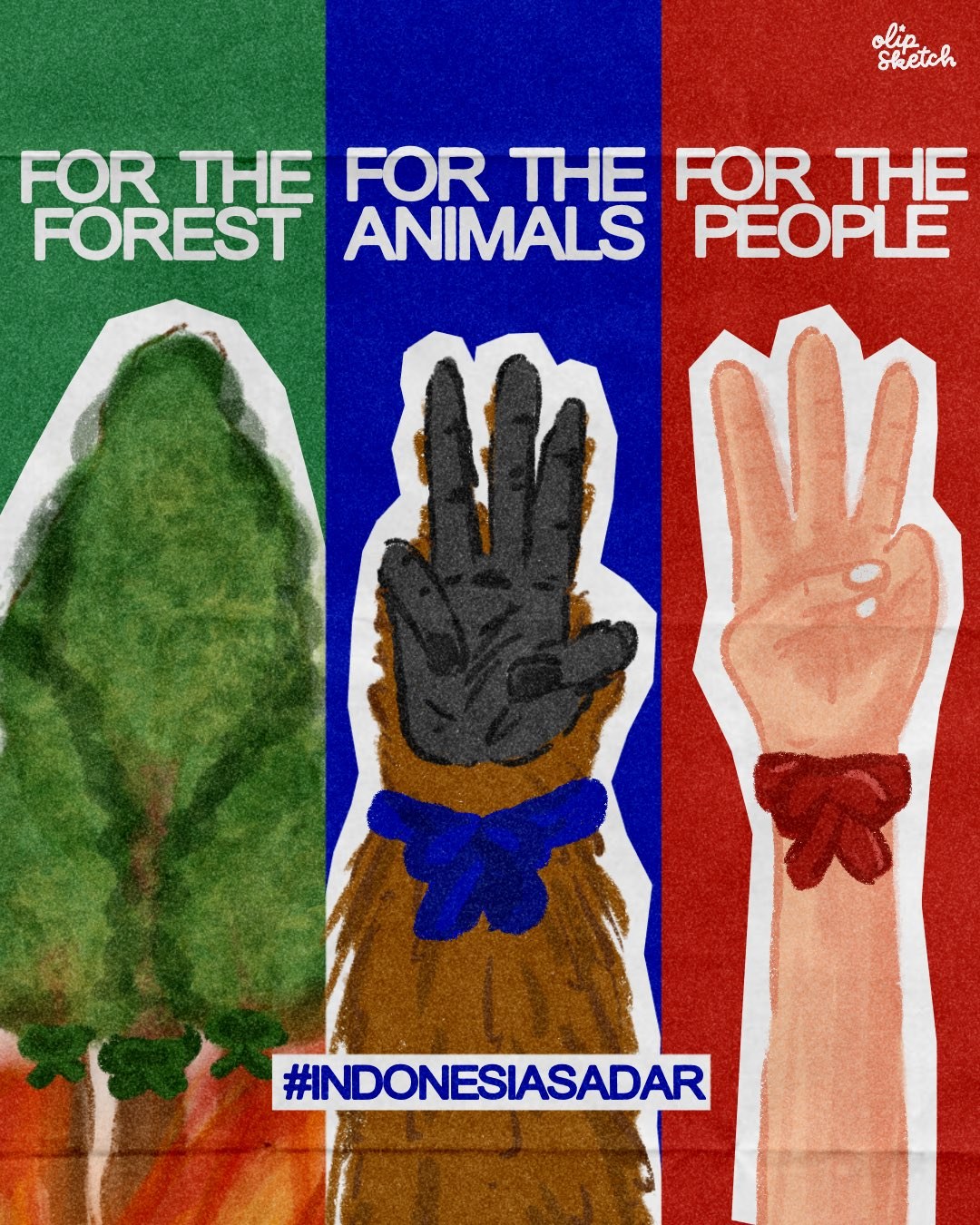 Source: @olivssketch
#IndonesiaSadar was the most talked-about hashtag on X between 28 and 30 October 2026. People used the hashtag to voice their concerns about taxes, the cost of basic necessities, forest fires, and government policies. What were people discussing? What concerns were they raising through #IndonesiaSadar? And how did the conversation unfold?
To explore and anser these questions, Kaiora collected 13,795 tweets over the three-day period, ending at 11:15 p.m. Western Indonesia Time (WIB) on 30 October.
What were people discussing, and what concerns were they voicing?
Kaiora grouped the tweets into 11 topic clusters based on similarities in meaning. Each tweet was converted into a numerical representation so that its meaning could be compared with other posts. Tweets discussing similar issues were then grouped together.
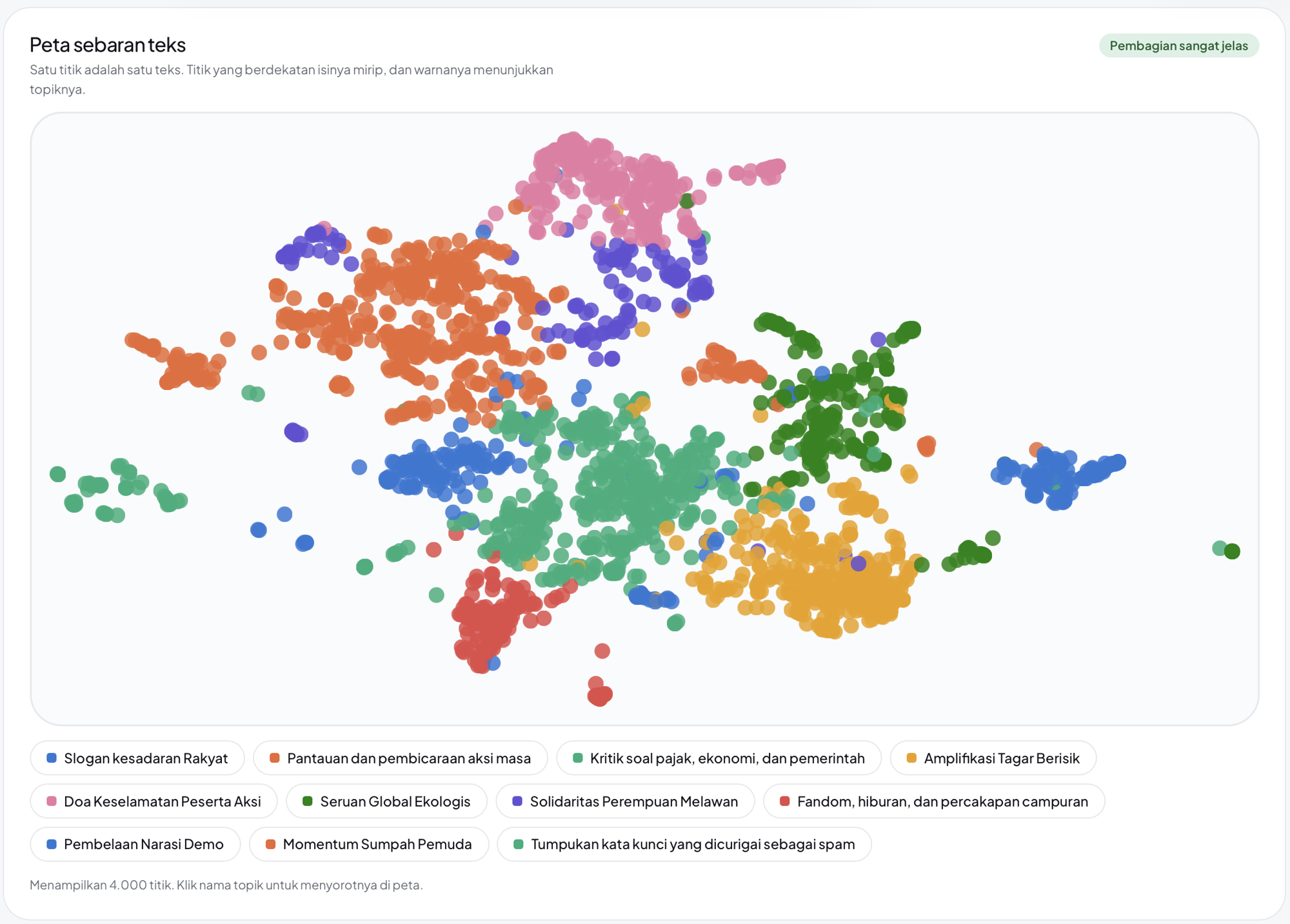
1. Awareness slogans: recognising shared problems (3,562 tweets)
“Sadar Dipalak, Sadar Dibakar, Sadar Dimiskinkan” was the most common slogan in the tweets analysed.
The slogan brings together three grievances: people feel they are being squeezed for money, their land is being burned, and they are being pushed into poverty. The repeated word sadar, meaning “aware,” conveys that people recognise what is happening to them.
The slogan also appeared in a longer version:
“Sadar Dibungkam, Sadar Dibohongi, Sadar Dibakar, Sadar Diperas, Sadar Dipalak, Sadar Dibodohi, Sadar Dimiskinkan.”
The longer version adds complaints about being silenced, lied to, exploited, and treated like fools. Some people ended the message with:
“Kami sadar dan akan melawan!”
A loose translation would be: “Our eyes are open, and we will fight back!”
In the tweets examined, different parts of the slogan were linked to specific concerns:
- Dipalak and diperas describe being forced or pressured to give up money. People connected these words to taxes, the cost of basic necessities, and the financial pressure of everyday life.
- Dibakar, meaning “being burned,” appeared in discussions about forest fires and environmental damage.
- Dimiskinkan, meaning “being made poor,” appeared alongside complaints about financial hardship and government policies.
- Dibungkam, dibohongi, and dibodohi refer to being silenced, lied to, and treated like fools. These words raised questions about whether citizens were being heard and whether those in power could be trusted.
These findings can also be seen in the word network map, which shows how these words cluster together (see the image below).
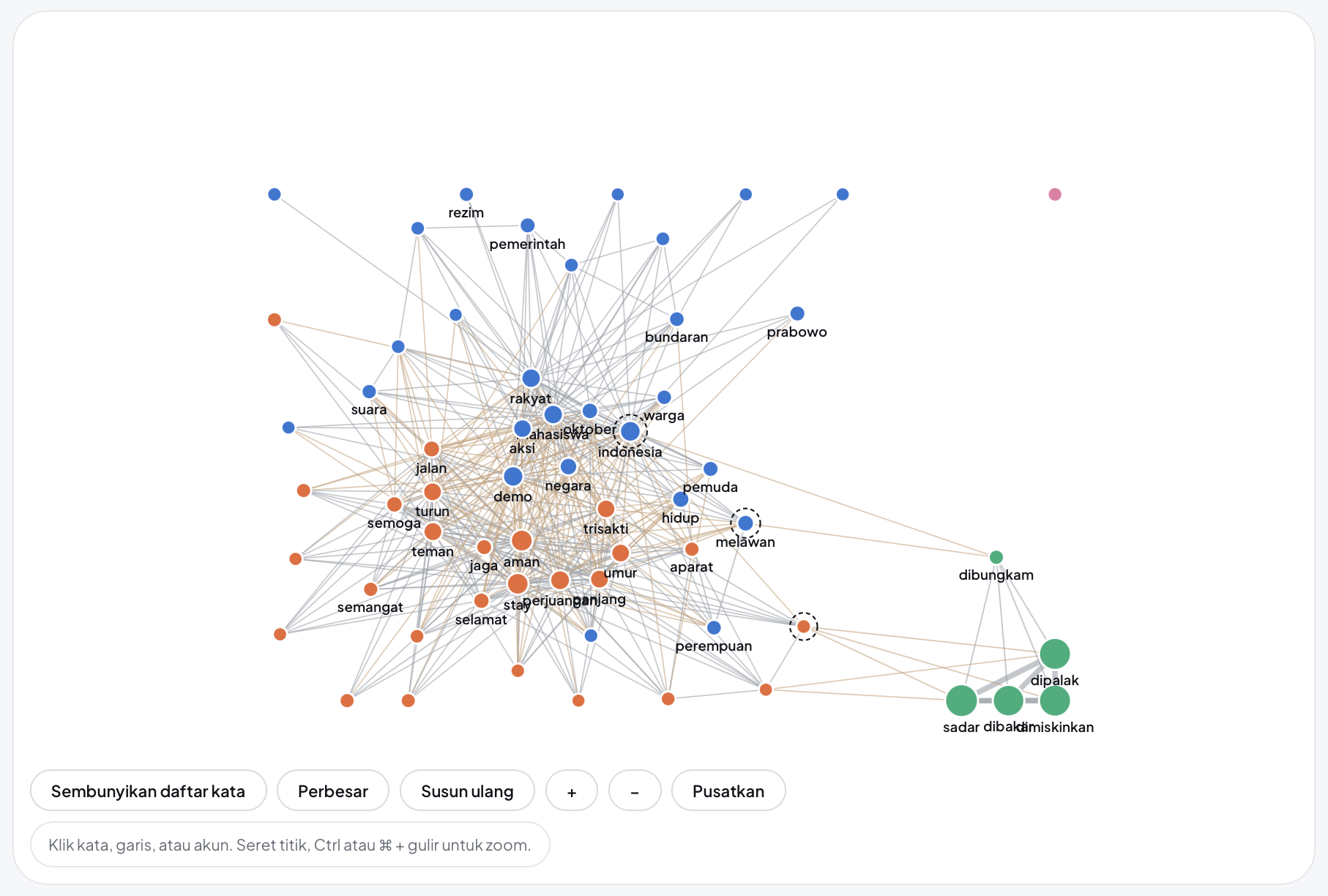
The repeated use of sadar encouraged people to recognise their shared problems. The words that followed expressed a sense of being burdened, ignored, unfairly treated, or harmed.
2. Updates from the student protests (1,035 tweets)
People also used #IndonesiaSadar to share updates from the demonstrations. They mentioned locations such as Bundaran HI, Trisakti, and Malioboro and described where protesters had gathered, whether security personnel were present, and how participants were doing.
Some tweets claimed that protesters had been prevented from reaching the protest site. Others reported clashes or claimed that security personnel had used tear gas. People also shared accounts of the events afterwards.
For people who are not joining the protests , the hashtag offered a way to keep up with events and find information about protesters’ safety.
3. Criticism of taxes, the economy, and the government (1,351 posts)
This cluster expressed anger about conditions in Indonesia. The discussion went beyond high taxes to include the cost of basic necessities, public spending, education, the environment, and the government’s response to criticism.
One user questioned why their right to criticise the government should depend on how much tax they pay. Others questioned the government’s priorities when choosing which programmes to fund.
The cost of sanitary pads also came up. Some people questioned why menstrual pads are taxed when they are a necessity that must be purchased every month. Some demanded, “ABOLISH THE TAX ON MENSTRUAL PADS!” Another tweet, for instance, described having to choose between food and pads with only Rp5,000 left. These tweets challenge the tax burden on an unavoidable need and call for policies that take women’s needs into account.
These concerns raised a broader question about what people bear and what the state provides in return. How much are citizens expected to pay or endure? What support do they receive? And does the government listen when they speak up?
4. Keeping the hashtag visible (1,249 posts)
Another group of posts encouraged people to share updates and keep using the hashtag. Some of the tweets, such as:
“Come on, let’s make some noise about this regime’s injustice #IndonesiaSadar”
“Sorry, all I can do is retweet.”
For people who could not attend the protest, sharing posts was a way to show support and help more people see the protesters’ demands.
It also allowed them to take part from a distance: passing on information, keeping public attention on the protests, and showing support for those on the streets.
5. Prayers and concern for protesters’ safety (1,035 posts)
“Stay safe” appeared repeatedly in these tweets. People prayed for protesters’ safety, reminded them to be careful, and thanked those who had joined the demonstrations or helped participants during the demonstrations.
One of the tweets, for instance, described protesters holding hands on their way home so that no one would be left behind. Others thanked people who recorded events, shared information, distributed food, or provided assistance.
The messages combined support with concern for those at the demonstrations. Some people were following events from far away and expressed their support through prayers.
6. Bringing environmental concerns to a wider audience (871 posts)
This group contained environmental messages, mostly written in other language (not Indonesian). One recurring slogan was:
“For the Forest, the Animals, and the People.”
It appeared alongside hashtags such as #IndonesiaButuhOksigen, meaning “Indonesia needs oxygen,” and #AllEyesOnIndonesia.
The tweets expressed concern about the state of Indonesia’s environment. Writing in English also allowed people who do not speak Indonesian to understand and share the messages.
How did the conversation develop?
The earliest tweet Kaiora found using #IndonesiaSadar was published on 19 October. The earliest tweet Kaiora found using #IndonesiaSadar was published on 19 October. Other tweets shared before the demonstration included calls to organise protests and encourage participation. Together, these tweets show four phases in the conversation.
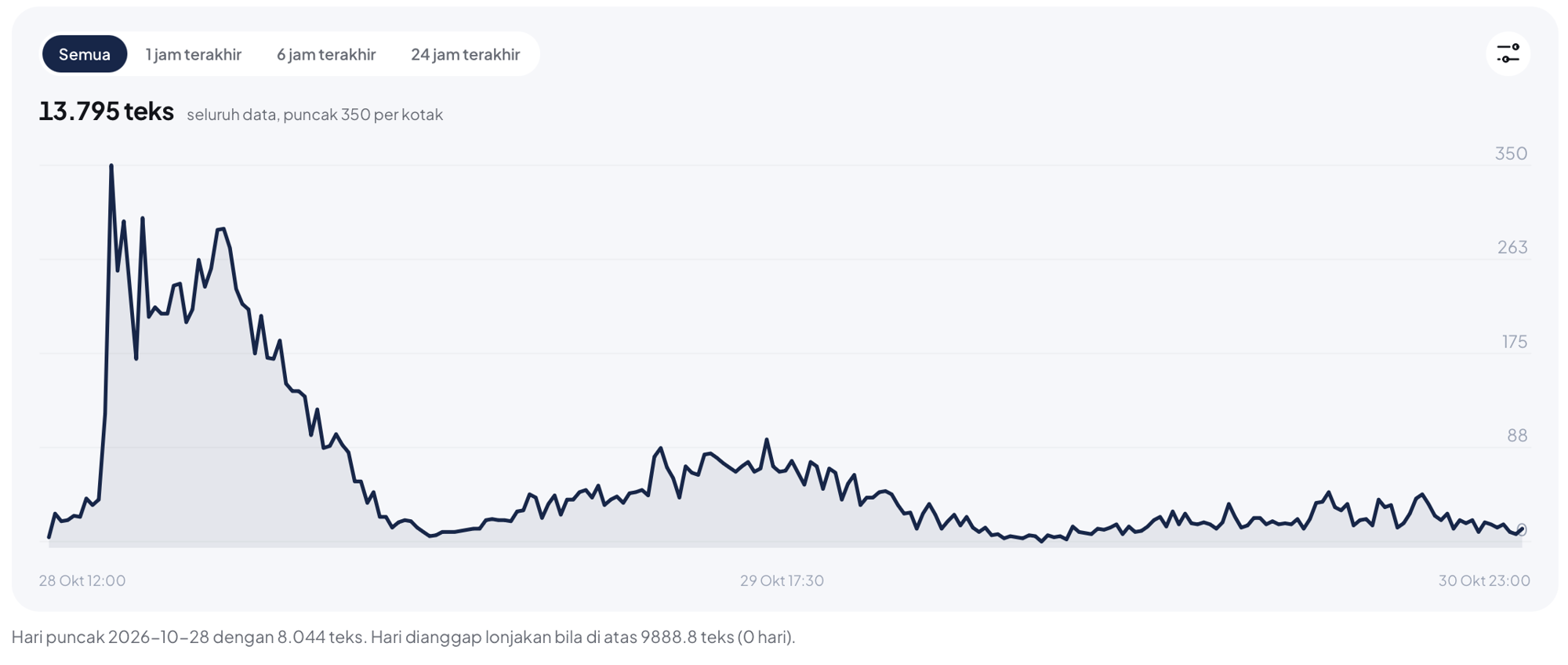
Phase 1: Bringing together reasons to speak up and take action
19–20 October
Early tweets used #IndonesiaSadar to question what two years of the Prabowo–Gibran administration had meant for people.
The following day, the hashtag appeared in updates about student protests at Tugu Proklamasi and demonstrations at Tugu Tani in Jakarta. The issues raised included forest fires, economic inequality, restrictions on civic space, corruption, and education costs.
In this case, some people already mentioned their plans for a larger protest on 28 October. This shows that preparations had begun several days before the hashtag gained wider attention on the day of the demonstration.
Phase 2: Preparing for the protest
24–27 October
Tweets began to focus on practical preparations, including transport and participants’ needs. People shared fundraising appeals to cover travel and protest expenses, encouraged others to attend, and circulated safety guides.
On 27 October, the longer slogan appeared in posts:
“Sadar Dibungkam, Sadar Dibohongi, Sadar Dibakar, Sadar Diperas, Sadar Dipalak, Sadar Dibodohi, Sadar Dimiskinkan.”
It was followed by:
“Kami sadar dan akan melawan!”
Other people copied and shared the message. Some added “HELP SPREAD THIS MESSAGE, GUYS,” while others reminded people that the protest would take place the next day.
At this stage, the message of sadar went beyond recognising problems. It encouraged people to act, whether by attending the protest, contributing money, or sharing information.
Phase 3: Protest day
28 October
“Sadar Dipalak, Sadar Dibakar, Sadar Dimiskinkan” was repeated widely and continued to circulate into the afternoon.
Some people shared the slogan with criticism of the government. Others encouraged people to keep “making noise” online, while some wrote, “Sorry, all I can do is retweet.”
By late afternoon, more tweets were reporting on conditions at the demonstrations. People shared information about where protesters had gathered in Jakarta and where security personnel were present. Some claimed that participants had been stopped on their way to the protest site.
Around 6 p.m., some people reported that tear gas and water cannons had been used near Graha Mandiri in Jakarta. Reports of tensions in Malioboro, Yogyakarta, also circulated.
Alongside these reports, people also shared prayers, “stay safe” messages, and reminders for protesters to look after one another.
The hashtag served two purposes during this phase: keeping the protesters’ demands in public view and helping people follow what was happening on the ground, during demonstrations.
Phase 4: Sharing experiences after the protest
29–30 October
Over the next two days, people continued to share accounts of the demonstrations, messages of support, and reports of violence by security personnel.
Some also responded to accusations that the protests only caused trouble. Concerns about the economy, the environment, and everyday needs continued to appear.
This progression helps explain the message “Kami sadar, maka kami bersuara”: “We see what is happening, so we speak up.”
Before the demonstration, people discussed their concerns and encouraged others to participate. During the protest, they shared slogans and updates from the streets. Afterwards, accounts of what protesters had experienced became part of the criticism directed at the government.
Which other hashtags appeared?
#IndonesiaSadar appeared in 13,147 posts in the hashtag analysis. #demo appeared in 938 posts, followed by #IndonesiaButuhOksigen in 193. The accompanying hashtags added context to the concerns people were raising.
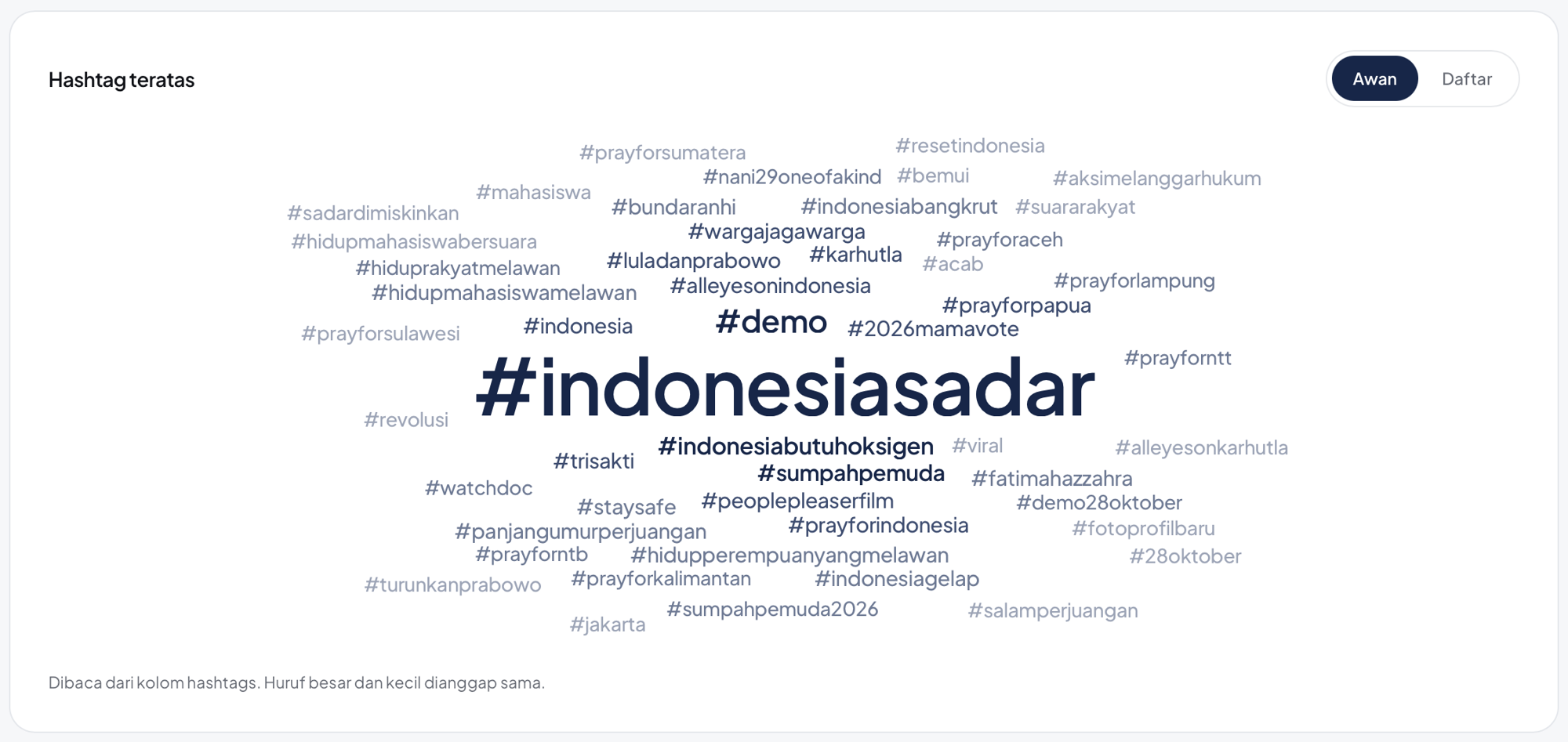
#IndonesiaButuhOksigen, for instance, appeared with messages about forests, wildlife, and people’s lives. #karhutla appeared in 31 posts. The term is short for kebakaran hutan dan lahan , meaning forest and land fires.
These tweets also helped explain the use of dibakar, or “being burned,” in the campaign slogan. People connected it to forest fires and their impact on people’s lives.
#AllEyesOnIndonesia appeared in 67 posts, while #PrayForIndonesia appeared in 40.
#WargaJagaWarga, meaning “citizens looking after one another,” appeared in 39 posts. #HidupPerempuanYangMelawan, roughly “long live women who resist,” appeared in 30.
Together, these hashtags called for wider attention, expressed prayers, encouraged mutual support, and showed solidarity with women who spoke up.
Mentions of officials and institutions carried more direct criticism
@prabowo was mentioned in 122 posts, @gerindra in 50, and @divhumas_polri in 44.
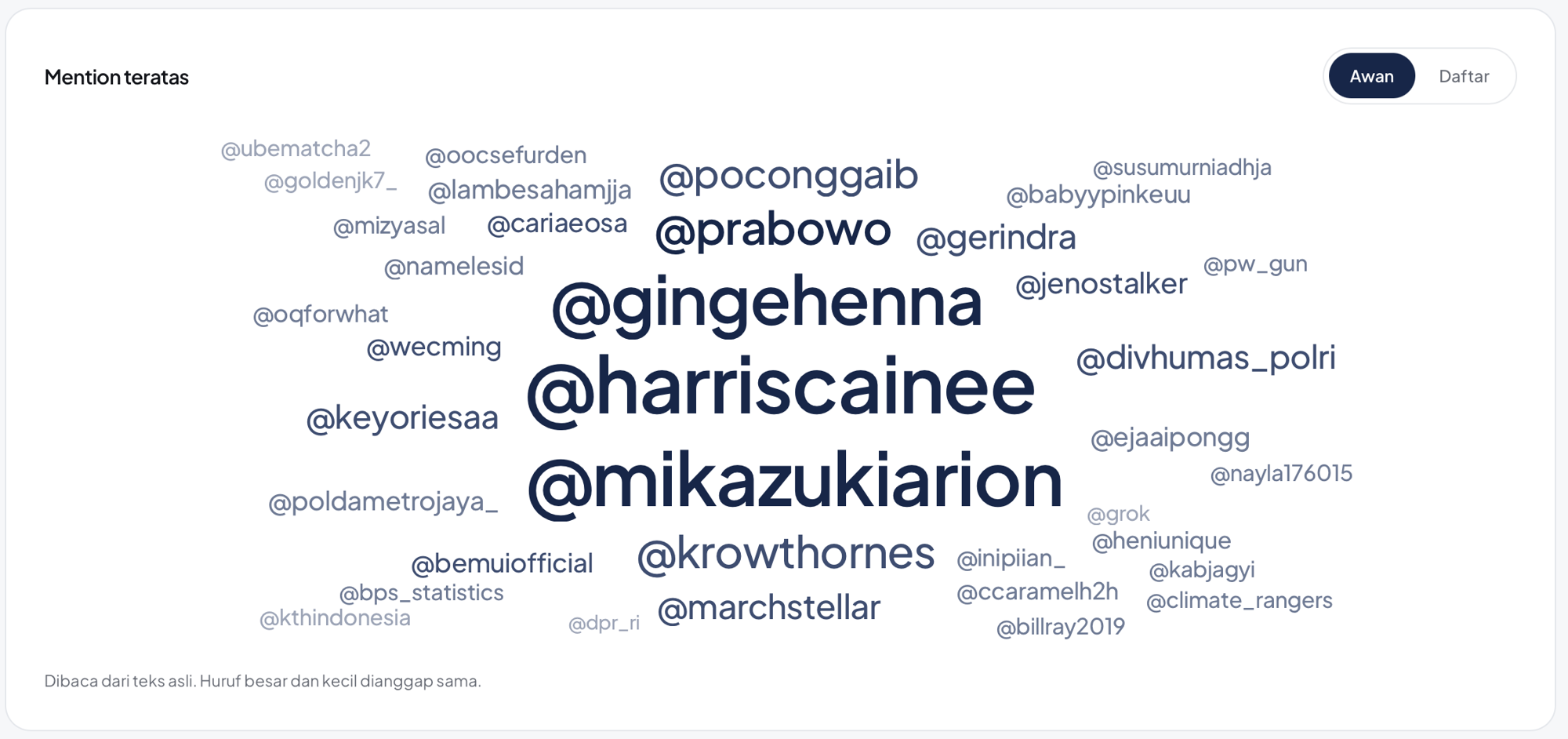
Posts mentioning these accounts questioned the response to public criticism, the treatment of protesters, and information published by the police. Some also called for leaders to step down.
While mentions of personal accounts often accompanied slogans, the posts mentioning officials and institutions more directly criticised their actions or called on them to take responsibility.
Closing
#IndonesiaSadar brought together concerns about living costs, taxes, education, and forest fires. The message “Our eyes are open, and we will fight back!” captured a sense of shared frustration and a call to act. Before the 28 October protest, people used the hashtag to raise concerns and prepare for the demonstration. During and after the protest, they shared updates, supported participants, and criticised the government and security personnel. The conversation shows how everyday concerns became connected to protest and public demands.
AI was used to assist with editing the article, including word choice, grammar, and sentence clarity.